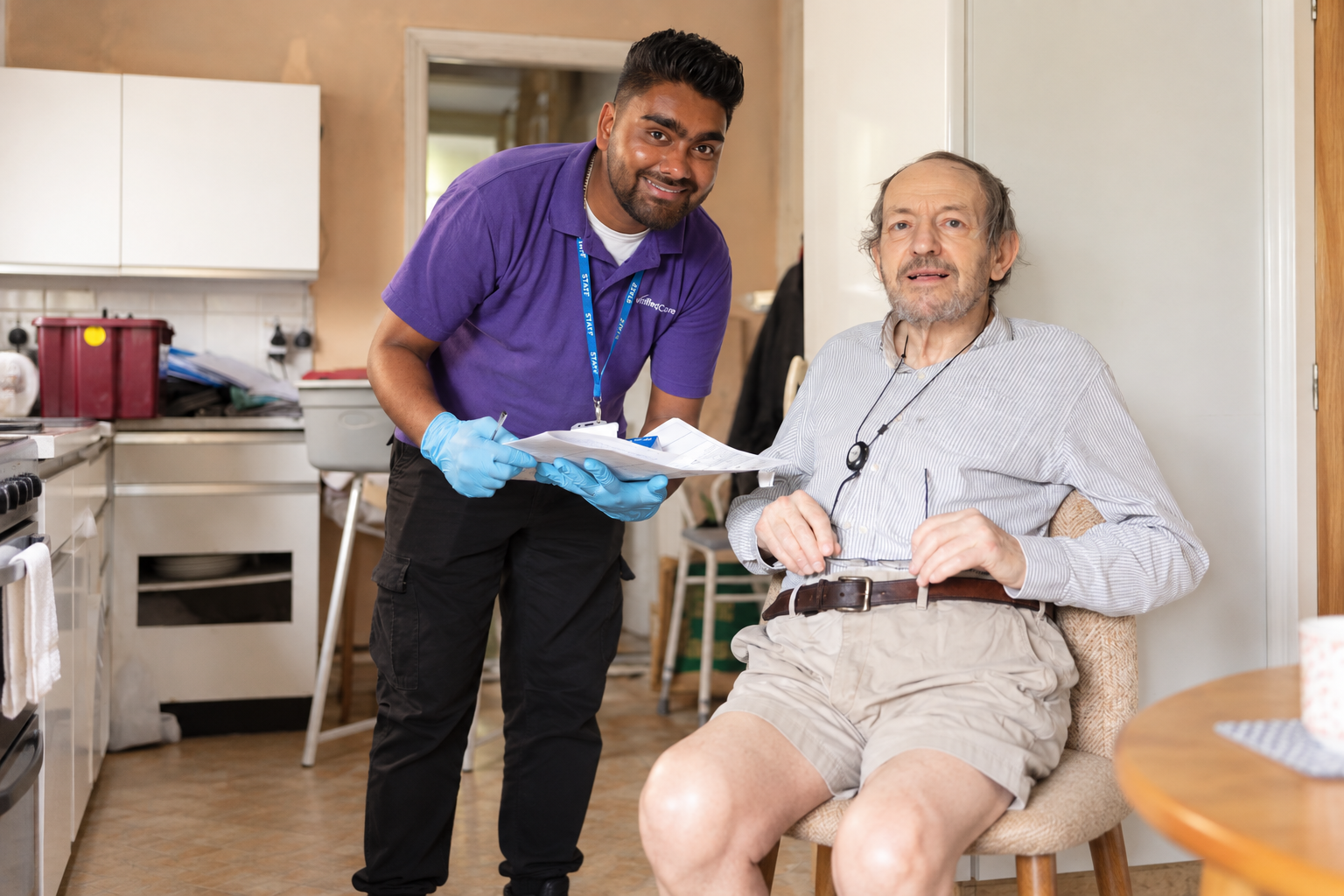
What Is Live-In Care and What Does a Live-In Carer Do?
When someone needs help through the day and night, families often assume a move into a care home is the only option. It isn’t. Live-in care means trained care staff live in your loved one’s home, so they get support around the clock without leaving the place they know.
This guide explains what live-in care is, how it works day to day, what a live-in carer does, what affects the cost, and how to decide whether it’s right for your family.
Key Takeaways
- Live-in care means care staff live in the person’s own home and provide support through the day and night.
- It’s an alternative to moving into a care home for people who need help around the clock.
- A live-in carer helps with personal care, meals, medication, household tasks and company.
- Care staff need their own bedroom and daily breaks, and usually work as part of a small rota.
- Live-in care can be long term or short term, and can support a couple living together.
What is live-in care?
Live-in care, sometimes called 24-hour live-in care, is one-to-one support from care staff who live with the person they’re caring for. Instead of visits at set times, help is there whenever it’s needed: first thing in the morning, through the day and into the evening.
It’s one of the options the NHS covers in its guide to help at home, alongside visiting care. The main difference is that live-in care fills the gaps between visits, so the person is rarely on their own for long.
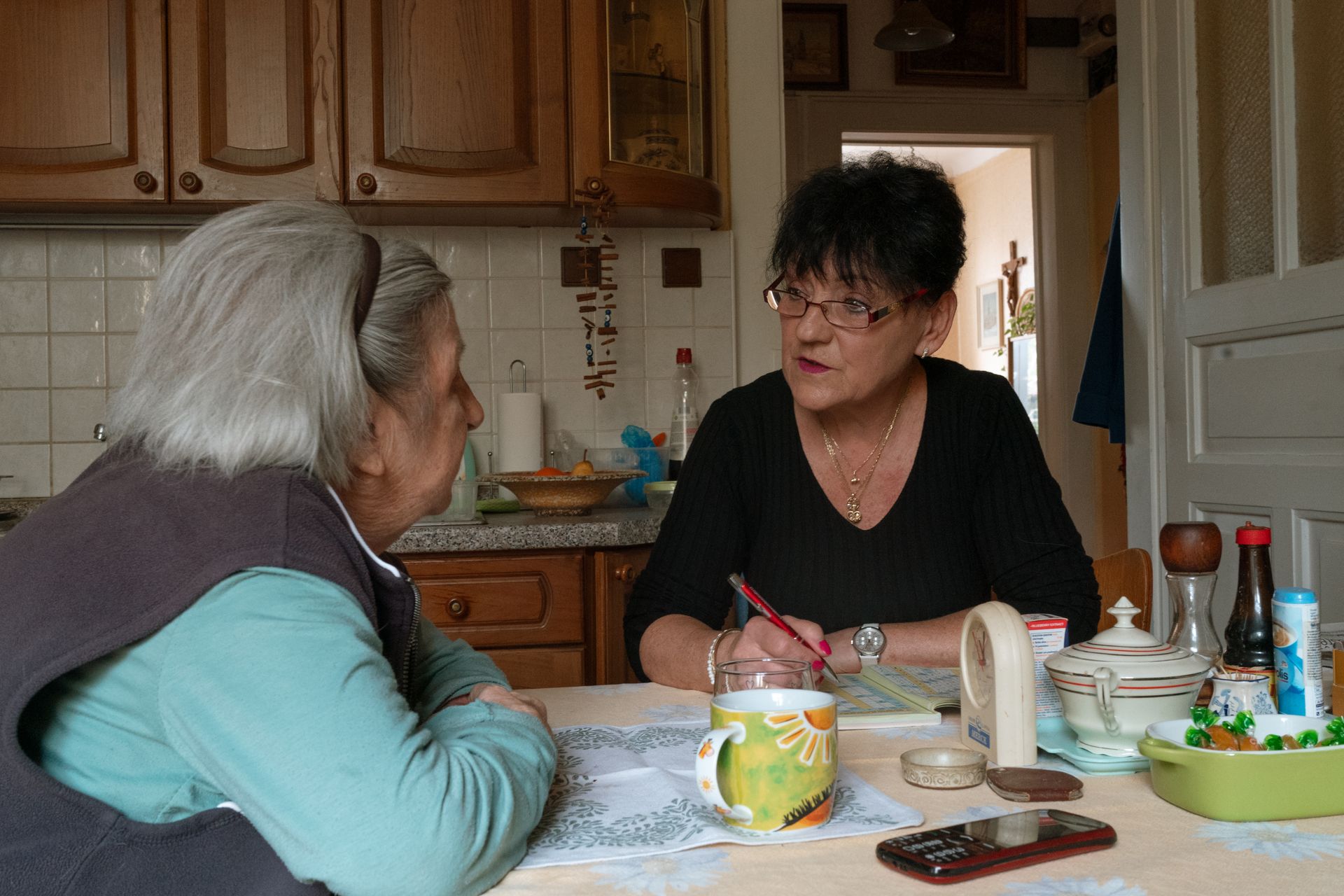
What does live-in care mean for the person receiving it?
Mostly, it means staying put. Their own bed, their own routine, their pets, neighbours and garden. For couples, it can mean staying together at home, even if only one of them needs care.
How does live-in care work?
Live-in care is usually arranged around a few practical points:
- A small team on a rota. One person can’t work every day, so live-in care is usually shared between a small team of care staff who take turns.
- A room of their own. Care staff need a private bedroom and somewhere to keep their things.
- Daily breaks. Live-in care staff have time off each day. If someone needs help during those breaks, extra cover can be arranged.
- Sleeping at night. Live-in care staff usually sleep at night. If someone regularly needs help through the night, a waking night may be needed as well.
- A care plan, agreed with the person and their family, and reviewed as needs change.
What does a live-in carer do?
A live-in carer supports the whole day, not just individual tasks. That usually includes:
- Personal care. Washing, dressing, using the toilet and continence care.
- Meals. Planning, shopping for and cooking meals, and helping with eating and drinking.
- Medication. Prompts or support to take medication at the right time.
- Moving safely. Help getting about the home and reducing the risk of falls.
- Running the home. Light cleaning, laundry and keeping things in order.
- Getting out. Appointments, shopping, walks and visits to friends.
- Company. Conversation, hobbies and someone there when the day feels long.
For people with more complex needs, such as dementia or a neurological condition, live-in care staff can be trained in specialist support and work alongside nurses and therapists.
Is live-in care right for your family?
| Live-in care often suits someone who | It may be less suited when |
|---|---|
| Needs help at different times through the day | Help is only needed at a few set times |
| Is at risk of falls or confusion, especially in the evening | There’s no spare bedroom for care staff |
| Wants to stay at home rather than move | Someone needs help through every night as well as every day |
| Lives with a partner and wants to stay together | Nursing care is needed around the clock |
If your loved one only needs help at certain times of day, visiting care may suit them better. Our guide explains what domiciliary care means and how visits work. And if you’re weighing up the options for a mum or dad, our guide to caring for an elderly parent covers the practical steps and where to get support.
How much does live-in care cost?
Live-in care is usually charged at a weekly rate rather than by the hour. How much live-in care costs depends on:
- How much help is needed, including whether anyone needs to be awake at night.
- Any specialist care, such as dementia or complex care.
- Whether care is for one person or a couple.
- How long it’s needed for, from a few weeks to long term.
As with other care, the council may contribute after a care needs assessment and a financial assessment, and benefits such as Attendance Allowance can help. Our team can talk you through costs with Verified Care on a call.
Questions to ask a live-in care provider
- How are care staff matched to my loved one?
- Will the same small team provide care, and how do handovers work?
- What training do care staff have, including for dementia or specialist needs?
- Who supports the care staff, and who do we call if there’s a problem?
- Is the provider registered with the Care Quality Commission (CQC)?
- How will we be kept updated?
Live-in care with Verified Care
Verified Care provides live-in care at home across East Riding and North Yorkshire, including as part of dementia and complex care packages. We’re nurse-led, so clinical oversight is built in where it’s needed, and we match care staff to your loved one on personality, interests and communication style.
We agree the care plan with your loved one and with you, and keep you involved as needs change. Care notes are kept in the Birdie app, so you can see how things are going even if you live some distance away. If live-in care isn’t needed yet, our home care services start from a few visits a week.
Your live-in care questions answered
What’s the difference between live-in care and 24-hour care?
Live-in care usually means care staff living in the home, with daily breaks and sleep at night. 24-hour care can also mean care staff working in shifts, with someone awake through the night, for people who need help at all hours.
Does a live-in carer need their own room?
Yes. Care staff need a private bedroom, as well as access to a bathroom and the kitchen, so they can rest properly between shifts.
Can live-in care be short term?
It can. Some families use live-in care for a few weeks, for example after a hospital stay or while a family carer is away.
Can live-in care support a couple?
Yes. Live-in care can support two people in the same home, which means a couple can stay together even when one or both of them needs care.
Is live-in care suitable for someone with dementia?
Often, yes. Familiar surroundings, a steady routine and the same small team of care staff can all help someone living with dementia feel more settled.
Home from hospital and not sure what comes next?
Whether a discharge date has just been set or reablement is coming to an end, our care staff can talk you through what happens next. No commitment, just a friendly chat