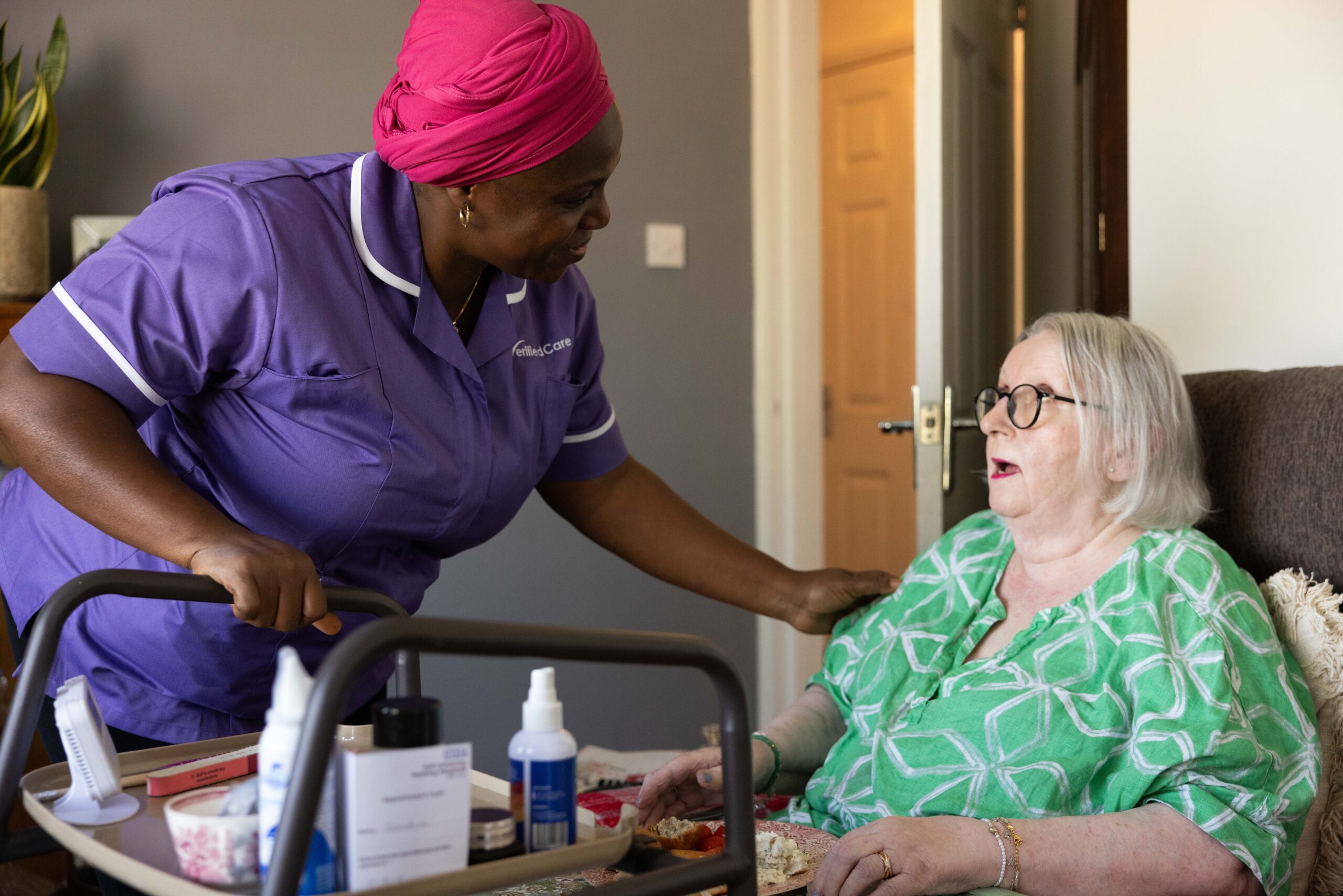
What Is Domiciliary Care? Meaning and What a Domiciliary Carer Does
If you’ve been looking into help for a parent or partner, you’ve probably come across the term domiciliary care. The domiciliary care meaning is simpler than it sounds. “Domiciliary” comes from the Latin word for home, so domiciliary care is care provided in someone’s own home. You’ll often hear it called home care or care at home.
This guide explains what domiciliary care is, what a domiciliary carer does on a typical visit, the different types of care, how much it costs and how to arrange it in East Riding and North Yorkshire.
Key Takeaways
- Domiciliary care means care and support provided in someone’s own home by trained care staff who visit.
- Visits can be as short as half an hour or last several hours, from once a week to several times a day.
- Support covers personal care, meals, medication, household tasks and company.
- Domiciliary care providers in England must be registered with the Care Quality Commission (CQC).
- It can be paid for privately, or funded by the council after an assessment.
What is domiciliary care?
Domiciliary care is support from trained care staff who visit someone at home, so they can carry on living independently. The NHS explains that homecare, also called domiciliary care, can be temporary or long term, and can range from an hour a week to several hours a day or overnight.
It’s different from residential care, where someone moves into a care home. With domiciliary care, the person stays in their own home, keeps their own routine and decides how their day goes, with help where they need it.

What does domiciliary care mean in practice?
In practice, it means a member of care staff arriving at an agreed time to help with whatever is in the care plan, whether that’s getting up and dressed, a hot lunch or a reminder to take medication. Between visits, the person carries on with life as usual.
What does a domiciliary carer do?
A domiciliary carer, also called a domiciliary care worker, home carer or homecare assistant, helps with the everyday tasks someone finds difficult. Examples of domiciliary care include:
- Personal care. Washing, bathing, dressing, using the toilet and continence care.
- Meals and drinks. Preparing food, helping someone eat, and making sure they’re drinking enough.
- Medication. Prompting someone to take their tablets, or giving medication where the care plan allows.
- Getting about. Help getting in and out of bed or a chair, and moving safely around the home.
- Household tasks. Light cleaning, laundry and keeping on top of the home.
- Out and about. Shopping, appointments and getting out into the community.
- Company. A chat, a cup of tea, and someone to notice if anything has changed.
Domiciliary care workers don’t usually provide nursing care, such as wound dressings or injections, which is done by community nurses. They do look out for changes and pass on any concerns to the family, GP or nurse.
Types of domiciliary care
Domiciliary care is flexible, so it can be shaped around one person’s routine. Common types include:
Type | What it involves |
|---|---|
Visiting care | Short visits at set times, for example morning, lunch, teatime and bedtime |
Longer sits | Several hours at a time, for company, supervision or to give family a break |
Overnight care | A sleep-in night, where care staff are there if needed, or a waking night |
Respite care | Short-term cover while a family carer takes a break |
Live-in care | Care staff who live in the home and provide support around the clock |
Live-in care works quite differently from visiting care, so we’ve written a separate guide explaining what live-in care involves.
Domiciliary care vs residential care
Domiciliary care | Residential care | |
|---|---|---|
Where | In your own home | In a care home |
Routine | Your own, with help at agreed times | Shared with other residents |
Support | As much or as little as you need | Around the clock |
Home life | Familiar surroundings, close to family and neighbours | A move away from home |
For many people, domiciliary care is what makes it possible to stay at home for longer. If someone needs support around the clock but would rather not move, live-in care is often an alternative.

Who is domiciliary care for?
Domiciliary care can help adults of any age who need support to live at home, including:
- Older people who are finding everyday tasks harder.
- People recovering after a hospital stay, an illness or an operation.
- People living with dementia.
- Adults with a disability, a learning disability or a long-term condition.
- Families who need help to keep caring for someone at home.
How much does domiciliary care cost?
Domiciliary care is usually charged by the hour. The cost depends on where you live, how long each visit lasts, and whether care is needed at night, at weekends or on bank holidays. There are several ways to pay for it:
- Council funding. After a care needs assessment and a financial assessment, the council may pay some or all of the cost.
- Paying privately. Many families self-fund, either fully or to top up council-funded care.
- Benefits. Attendance Allowance and Personal Independence Payment aren’t means-tested and can help towards the cost.
- NHS continuing healthcare, for people whose needs are mainly health needs.
Our team can talk you through costs with Verified Care on a call.
How to arrange domiciliary care
- Start with an assessment. A care needs assessment from the council is free, and useful even if you plan to pay privately, because it sets out what help is needed.
- Check the provider is registered. All domiciliary care providers in England must be registered with the Care Quality Commission (CQC), and you can read their latest inspection report online.
- Ask the right questions. How are care staff trained and matched? Will the same people visit? What happens if a visit runs late? How will you be kept informed?
- Agree a care plan. It should set out what happens at each visit, and be reviewed as needs change.
Home care with Verified Care
Our home care service supports people across East Riding and North Yorkshire to live safely and independently at home. Care staff help with personal care, meals, medication, light housekeeping and appointments, in a way that respects the dignity, comfort and individual needs of each service user.
- Visits of 30, 45 or 60 minutes, once or several times a day.
- Domestic visits of two hours.
- Longer sits of 6 to 12 hours.
- Overnight support, with sleep-in or 10-hour waking nights.
Verified Care is nurse-led and registered with the Care Quality Commission. We keep a small, consistent team around each service user, matched on personality and interests, and agree the care plan with them and their family. If needs grow, our wider home care services include live-in care and complex care.
Your domiciliary care questions answered
What’s the difference between domiciliary care and home care?
There isn’t one. Domiciliary care is the formal term used by councils and the CQC, and home care or care at home is the everyday name for the same thing.
What qualifications does a domiciliary care worker need?
There’s no set qualification to start. Care staff are trained by their provider when they join, and many go on to complete Level 2 and Level 3 Diplomas in Adult Care.
Can domiciliary care include overnight care?
Yes. Overnight care can be a sleep-in night, where care staff are there if needed, or a waking night, where they stay awake to help.
Is domiciliary care regulated?
Yes. Domiciliary care providers in England must be registered with and inspected by the Care Quality Commission, which publishes its reports online.
How quickly can domiciliary care start?
It depends on the provider and what’s needed, but private care can often start within days, and sometimes sooner after a hospital stay. Council-arranged care follows an assessment, which can take longer.
Home from hospital and not sure what comes next?
Whether a discharge date has just been set or reablement is coming to an end, our care staff can talk you through what happens next. No commitment, just a friendly chat